The word for appears everywhere. You may use it repeatedly in an email, essay, caption, resume, conversation, or professional report without noticing how often it appears.
The challenge is that for can express purpose, benefit, duration, reason, exchange, support, destination, and several other relationships.
That means there is no single replacement that works in every sentence. The right alternative depends on what for actually means in context.
This guide explains the meaning of for, shows practical alternatives, and helps you choose more precise wording without making your writing sound unnatural.
What Does “For” Mean?
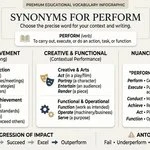
For is a preposition used to express purpose, benefit, duration, reason, destination, exchange, or support. Depending on context, alternatives include toward, regarding, because of, during, on behalf of, intended for, concerning, per, and in support of.
Meaning, Tone and Context
Simple Definition
For is a preposition that connects one part of a sentence to another. It commonly explains why something happens, who benefits, how long something lasts, what something is intended to do, or what something is exchanged for.
Consider these examples:
I bought a gift for Maria.
The meeting lasted for two hours.
This tool is useful for editing documents.
She received payment for her work.
The word has a different function in each sentence, so replacing it requires attention to meaning.
Part of Speech
For is most commonly used as a preposition.
It can introduce a noun, pronoun, noun phrase, or gerund.
Examples include:
This letter is for you.
They prepared for the examination.
He worked for three hours.
Tone
The word for is generally neutral.
It is neither strongly formal nor strongly casual. It works naturally in everyday conversation, academic writing, business communication, creative writing, and professional documents.
Formality Level
For is appropriate at almost every level of formality.
In many cases, keeping for is actually better than replacing it. A complicated alternative can make a simple sentence sound unnecessarily formal.
Common Uses
The word can express several relationships:
Purpose: This guide is for beginners.
Benefit: She prepared dinner for her family.
Duration: We waited for an hour.
Reason: He was praised for his honesty.
Destination: They left for Chicago.
Exchange: I paid $20 for the book.
Support: They voted for the proposal.
Representation: She spoke for the committee.
Intended use: This room is for meetings.
When and How to Use “For”
The best way to understand for is to examine the relationship it creates in a sentence.
Professional
The software is designed for small businesses.
Here, for identifies the intended users.
Personal
I bought this card for my sister.
The word identifies the person who will receive the item.
Academic
This method is useful for analyzing historical documents.
Here, for introduces the purpose or activity for which something is useful.
Emotional
She was grateful for the support she received.
The word identifies the reason for her gratitude.
Creative
The traveler searched for a place where he could finally rest.
Here, for follows the verb searched and identifies what the person wanted to find.
Social Media
A simple reminder for anyone who needs encouragement today.
The word identifies the intended audience.
Thank you for your quick response.
This construction identifies the reason for appreciation.
Another Word for “For”
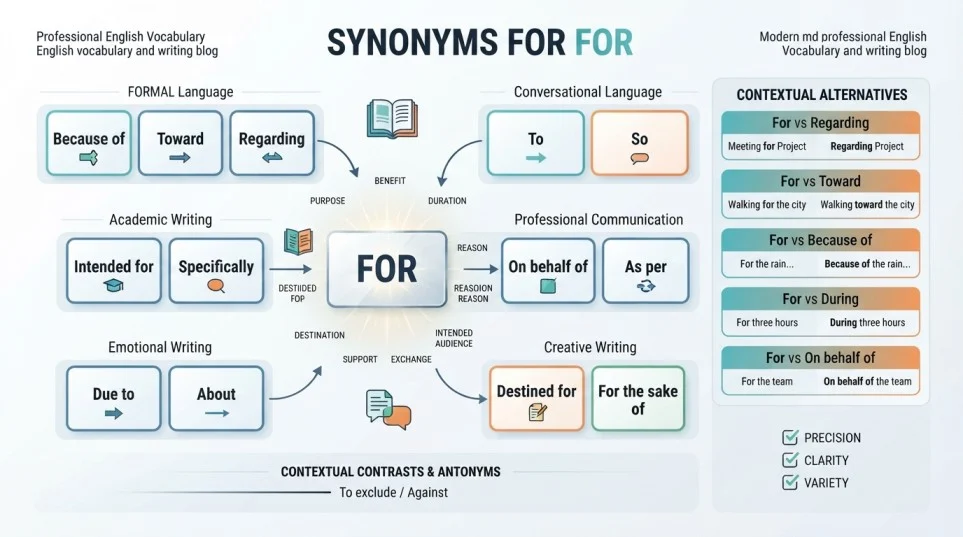
There is no single best synonym for for because its meaning changes according to the sentence.
For professional writing, alternatives such as regarding, concerning, on behalf of, intended for, and in support of can sometimes provide greater precision.
For academic writing, regarding, concerning, during, because of, and for the purpose of may work when they accurately express the intended relationship.
For casual conversation, simply keeping for is often the most natural choice.
For emotional writing, phrases such as because of, in appreciation of, in memory of, and in support of can add more specific meaning.
For creative writing, alternatives such as toward, destined for, meant for, and in search of can create a more descriptive effect.
For resumes and workplace writing, supporting, serving, intended for, and on behalf of may be useful when they make the relationship clearer.
For social media captions, for is usually the strongest choice because it is short, familiar, and natural.
For a stronger meaning, use a phrase that specifies the exact relationship instead of simply replacing for.
For a softer meaning, retain for or choose a neutral contextual phrase.
When Not to Use “For”
Although for is extremely useful, repeating it too often can make writing less precise.
For example:
Less precise:
We created this report for the purpose of helping managers.
More direct:
We created this report to help managers.
The second sentence is shorter and more natural.
Another example:
Less precise:
The announcement was for the new policy.
More precise:
The announcement concerned the new policy.
Here, concerning makes the relationship clearer.
However, do not replace for simply to sound sophisticated. If for is the clearest and most natural choice, keep it.
Words Commonly Confused With “For”
For vs. To
For often expresses benefit, purpose, or intended use, while to commonly expresses direction, movement, or an infinitive purpose.
I bought flowers for my mother.
I went to the store.
I called to ask a question.
For vs. Since
For describes a length of time.
I have lived here for five years.
Since identifies the point when something began.
I have lived here since 2021.
For vs. During
For usually describes duration.
We stayed there for three days.
During identifies a period or event in which something happened.
We met during the conference.
For vs. Because of
For can introduce a reason in some constructions, but because of makes causation more explicit.
She was rewarded for her honesty.
The event was canceled because of heavy rain.
For vs. About
For can identify an intended recipient or purpose.
This gift is for you.
About generally introduces a topic.
The book is about leadership.
For vs. Toward
For can indicate destination or direction in certain constructions.
They left for Boston.
Toward emphasizes movement in a particular direction.
They walked toward the station.
Best Synonym by Context for “For”
Which Synonym Should You Choose?
Start by identifying what for means in your sentence.
If it means about a topic, consider regarding or concerning.
If it means because of a reason, consider because of or owing to.
If it means representing someone, consider on behalf of.
If it means supporting something, consider in support of.
If it means during a period, consider during.
If it means intended for someone or something, consider intended for, meant for, or destined for.
If it expresses exchange, consider in exchange for.
If it expresses purpose, consider to or for the purpose of, depending on sentence structure.
Most importantly, choose the replacement based on meaning rather than simply trying to avoid repetition.
Real Life Examples of “For” in Sentences
School
This worksheet is for students preparing for the final exam.
Workplace
I prepared the presentation for tomorrow’s meeting.
Writing
The article provides practical advice for new writers.
Conversation
What did you buy that for?
Social Media
A little motivation for anyone having a difficult day.
Resume
Developed training materials for new employees.
Thank you for taking the time to respond.
Storytelling
She searched for the missing key until sunset.
25 Synonyms for “For”
Because for has multiple grammatical meanings, the following list contains contextual alternatives rather than claiming that every item can replace for in every sentence.
Synonym Groups and Usage Differences
Professional vs. Personal Synonyms
In personal communication, for is usually perfectly natural.
I bought this gift for you.
Professional writing sometimes benefits from greater precision.
I am writing on behalf of the department.
The distinction is not about making professional language complicated. It is about identifying the exact relationship being expressed.
Formal vs. Conversational Synonyms
For works comfortably in both formal and conversational English.
Words such as regarding, concerning, with respect to, and owing to are more formal in many contexts.
In everyday conversation, replacing every instance of for with a formal phrase can make your speech sound unnatural.
Academic Synonyms
Academic writing often benefits from precise relationships.
Use for the purpose of when purpose needs to be explicit.
Use regarding or concerning when introducing a subject.
Use because of or owing to when explaining causation.
However, academic writing does not require replacing for everywhere. Simple language is often clearer.
Professional and Business Synonyms
Business communication frequently uses phrases such as on behalf of, regarding, concerning, in response to, intended for, and in support of.
Choose these expressions when they communicate a more specific relationship than for.
For example:
General:
This report is for managers.
More specific:
This report is intended for managers.
The second version highlights the intended audience.
Creative or Literary Synonyms
Creative writing can use alternatives when they create a clearer image.
Instead of:
She walked for the mountains.
A writer might say:
She walked toward the mountains.
Instead of:
He went for an answer.
A more descriptive version could be:
He went in search of an answer.
The goal is not to eliminate for, but to select language that better supports the scene.
Slang or Modern Synonyms
There are few genuine slang synonyms for for.
Casual English often keeps for because it is already short and natural.
Trying to replace it with trendy wording can make a sentence sound forced. In professional and academic writing, standard prepositions are generally the safer choice.
Strongest vs. Weaker Synonyms
There is no universal intensity scale for for because its meaning changes by context.
For purpose:
for
intended for
for the purpose of
For causation:
for in suitable constructions
because of
owing to
For support:
for
in favor of
in support of
The longer expressions are not necessarily stronger. They are often simply more specific.
Emotional vs. Neutral Synonyms
For is usually neutral.
In memory of adds a memorial tone.
In appreciation of adds gratitude.
In support of adds solidarity.
In favor of communicates agreement with a position.
Choose an emotional alternative only when that emotional meaning is actually intended.
Antonyms of “For”
The word for does not have 15 direct dictionary antonyms because it is a preposition with several unrelated meanings. The following table therefore gives contextual contrasting expressions. These are useful opposites only in the specific meanings shown.
Comparison: For vs. Similar Words
For vs. To
The main difference is grammatical function.
For often expresses benefit, purpose, duration, or exchange.
To commonly expresses direction, destination, or an infinitive purpose.
For:
This book is for beginners.
To:
She went to the library.
Neither is automatically stronger or more formal. The correct choice depends on grammar and meaning.
For vs. About
For can identify a recipient, purpose, or intended use.
About usually identifies a topic.
For:
This gift is for Maria.
About:
The book is about Maria’s career.
About is not generally a replacement for for.
For vs. Regarding
For has many meanings.
Regarding specifically means concerning or about a subject.
For:
Thank you for your help.
Regarding:
I have a question regarding your application.
Regarding is more formal than for when discussing a topic.
For vs. Because of
For can introduce a reason in certain constructions.
Because of clearly expresses cause.
For:
She was praised for her honesty.
Because of:
The event was canceled because of the storm.
Because of is more explicit when explaining why something happened.
For vs. During
For usually identifies duration.
During identifies a period or event when something happens.
For:
We stayed there for two weeks.
During:
We met during the conference.
Neither is more formal. They express different relationships.
For vs. Toward
For can indicate a destination after certain verbs.
Toward emphasizes direction.
For:
They left for Boston.
Toward:
They walked toward Boston.
Toward is often more descriptive when the movement itself matters.
Common Phrases and Expressions with “For”
1. For example
Meaning: Used to introduce an example.
Example sentence: Many activities improve vocabulary, for example, reading and journaling.
2. For instance
Meaning: Another formal or neutral way to introduce an example.
Example sentence: Some words change meaning by context, for instance, the word “for.”
3. For a while
Meaning: For a period of time that is not precisely stated.
Example sentence: We talked for a while after the meeting.
4. For now
Meaning: At the present time, with the possibility of change later.
Example sentence: For now, the current plan is working.
5. For good
Meaning: Permanently.
Example sentence: They decided to leave the city for good.
6. For sure
Meaning: Definitely or certainly.
Example sentence: I will be there for sure.
7. For the most part
Meaning: Generally or in most cases.
Example sentence: For the most part, the instructions are easy to follow.
8. For the sake of
Meaning: For the benefit or purpose of someone or something.
Example sentence: They simplified the explanation for the sake of clarity.
Common Mistakes to Avoid
1. Replacing “for” without checking meaning
Not every alternative works in every sentence.
Incorrect replacement can change the meaning completely.
2. Confusing “for” with “since”
Use for for duration and since for the starting point.
I have worked here for five years.
I have worked here since 2021.
3. Using a formal alternative unnecessarily
Replacing for with with respect to in every sentence can make simple writing unnecessarily complicated.
4. Using an overly dramatic alternative
A simple sentence does not always need a creative replacement.
This gift is for you.
That sentence is already clear and natural.
5. Repeating “for” too often
Repetition can sometimes make writing feel flat. When the same meaning appears repeatedly, consider whether a more precise phrase improves clarity.
6. Choosing the wrong emotional tone
For is neutral, while in memory of and in appreciation of carry specific emotional meanings.
Do not use an emotional phrase unless that meaning is intended.
7. Using slang in formal writing
There are few useful slang replacements for for. Standard English is generally clearer in academic and professional communication.
FAQs
What is the best synonym for “for”?
There is no single best synonym. Regarding, toward, because of, during, and on behalf of can work in specific contexts, but for is often the clearest choice.
What is a formal synonym for “for”?
Formal alternatives include regarding, concerning, owing to, with respect to, on behalf of, and for the purpose of, depending on meaning.
What is an informal synonym for “for”?
There is no universal informal synonym for for. In casual English, for is already natural and usually does not need replacement.
What is another word for “for” in professional writing?
Professional alternatives include regarding, concerning, intended for, on behalf of, in response to, and in support of when they accurately express the intended relationship.
What is the difference between “for” and “to”?
For commonly expresses benefit, purpose, duration, or exchange. To often expresses direction, destination, or an infinitive purpose.
What is the opposite of “for”?
There is no single opposite of for. Against can contrast with for when for means supporting a person, position, or proposal.
Conclusion
The word for is short, flexible, and extremely common. It can express purpose, benefit, duration, reason, destination, exchange, support, and several other relationships.
The best alternative depends entirely on meaning. Regarding works for topics, because of works for causes, during works for periods, toward works for direction, and on behalf of works for representation.
The most useful vocabulary habit is to ask what for means in the sentence before searching for a replacement. A precise contextual alternative is better than an impressive sounding word that changes the meaning.
If you are looking for synonyms for for, remember that variety is helpful, but clarity comes first. When for is already the most natural choice, there is no reason to replace it.
Discover More Post:
- 25+ Synonyms for Proficient | Meanings, Examples, and Best …
- 25+ Synonyms for Depression | Meanings, Examples, and …
- 25+ Synonyms for Marginalized | Meanings, Examples, and Best …